Skip to content

Platform

The Enterprise Business Operating System Platform

A metadata-driven platform that unifies business applications, workflows, AI and enterprise data into one extensible operating system.

8-layer stack

  1. L8Experience Layer
  2. L7Applications & Plugins
  3. L6Metadata Engine
  4. L5Workflow & Orchestration
  5. L4AI Platform
  6. L3Data Layer
  7. L2Platform Kernel
  8. L1Infrastructure

Why Business Operating System

Traditional SaaS was never designed to run the business

Point tools multiply databases, identities, workflows, and AI islands. Woxox replaces that fragmentation with one operating system.

Why traditional SaaS fails

Multiple databases

Every SaaS app owns a siloed store — sync jobs, duplicates, and conflicting truth.

Multiple identities

Users juggle logins, roles, and provisioning across tools that never share one security model.

Multiple workflows

Approvals and automations stop at app boundaries; processes fracture across vendors.

Disconnected AI

Point copilots without shared context, governance, or a single model control plane.

Multiple integrations

Integration tax grows with every new tool — brittle APIs, mapping, and ops overhead.

Woxox solves this

One Platform. One Database. One Login. Unlimited Business Solutions.

One identity, one database, one metadata layer, one workflow engine, and one AI platform — so every department runs on the same enterprise foundation.

Platform Principles

Eight principles. One operating system.

Interactive principles that every module, plugin, and API must honor.

One Identity

SSO, MFA, SCIM — one principal across every module.

Interactive 8-Layer Architecture

The stack enterprise architects evaluate

Expand each layer for purpose, responsibilities, core services, benefits, APIs, and documentation.

  1. Purpose

    Cloud-native foundation for compute, network, storage, and observability.

    Responsibilities

    • · Multi-region capacity and failover
    • · Encrypted storage and key management
    • · Network isolation and edge protection
    • · Telemetry, logging, and alerting

    Core services

    • · Compute
    • · Object storage
    • · Secrets
    • · CDN
    • · Observability

    Enterprise benefits

    • · Elastic scale
    • · Hardened baseline
    • · Operational visibility

    Developer APIs

    • · Infra status API
    • · Region metadata
    Related documentation

Platform Kernel

Every application depends on the kernel

Authentication, identity, permissions, search, audit, storage, configuration, and tenant isolation — shared services, not per-app rewrites.

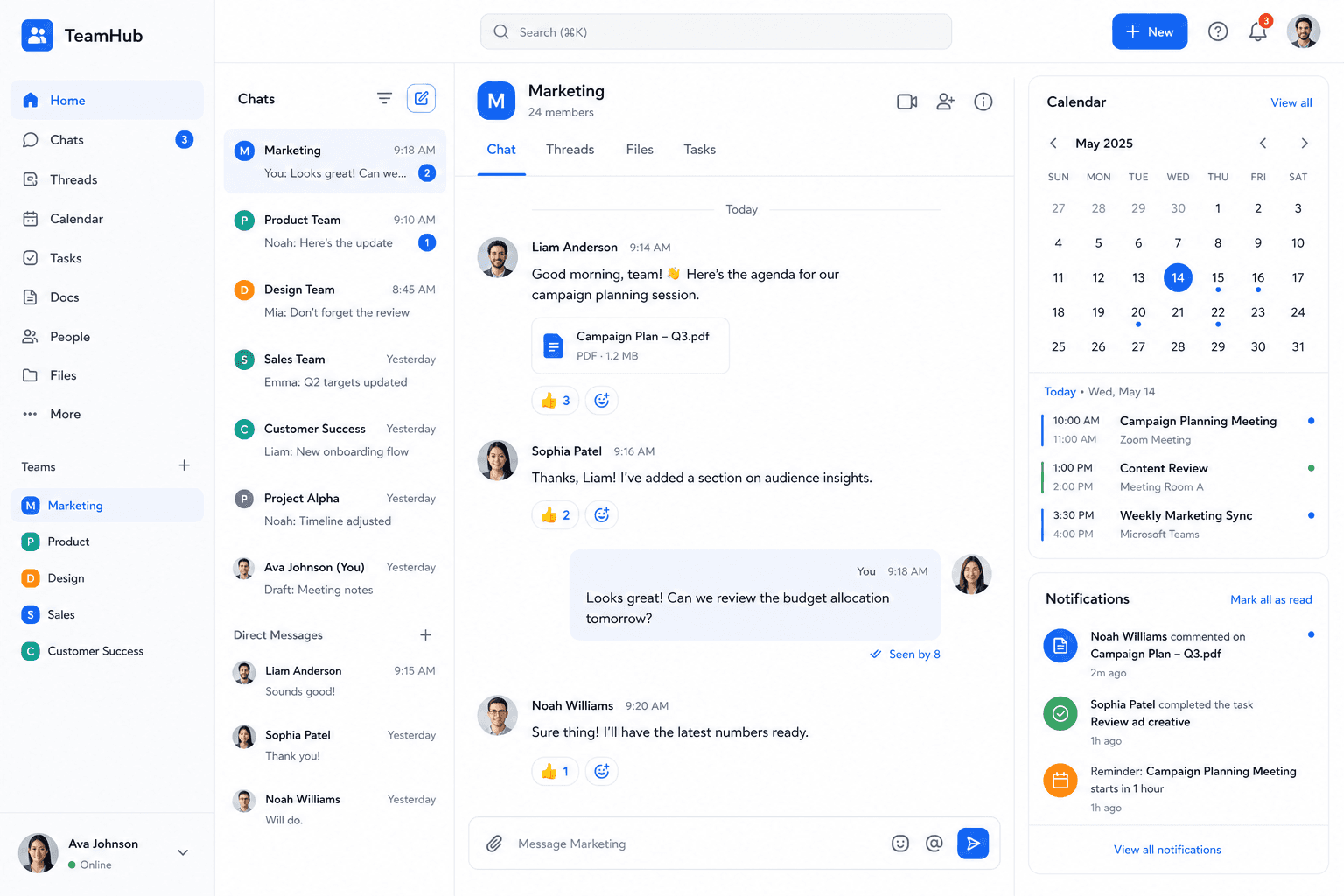
Customer, Finance, People, Operations, Documents, Communication, AI, and Marketplace plugins all call the same kernel. Security and tenancy are never reinvented per module.

Authentication

Passwordless options, SSO/SAML, OAuth 2.0, session hardening.

Identity

Users, groups, service principals, and SCIM provisioning.

RBAC

Role templates with module-, record-, and field-level grants.

ABAC

Attribute policies for department, region, sensitivity, and tenure.

Permissions

Central evaluation used by every API and UI surface.

Notifications

In-app, email, and push with preference and quiet hours.

Search

Unified index across entities, files, and conversations.

Audit Logs

Immutable trail of admin and data actions for compliance.

Storage

Secure blobs with retention, encryption, and access policies.

Configuration

Tenant settings, feature flags, and environment promotion.

Tenant Isolation

Logical isolation for orgs, subsidiaries, and workspaces.

Universal Entity Model

One graph. No data silos.

Company, users, customers, deals, employees, invoices, documents, tickets, and workflows share relationships on a single model — removing the sync tax of disconnected SaaS.

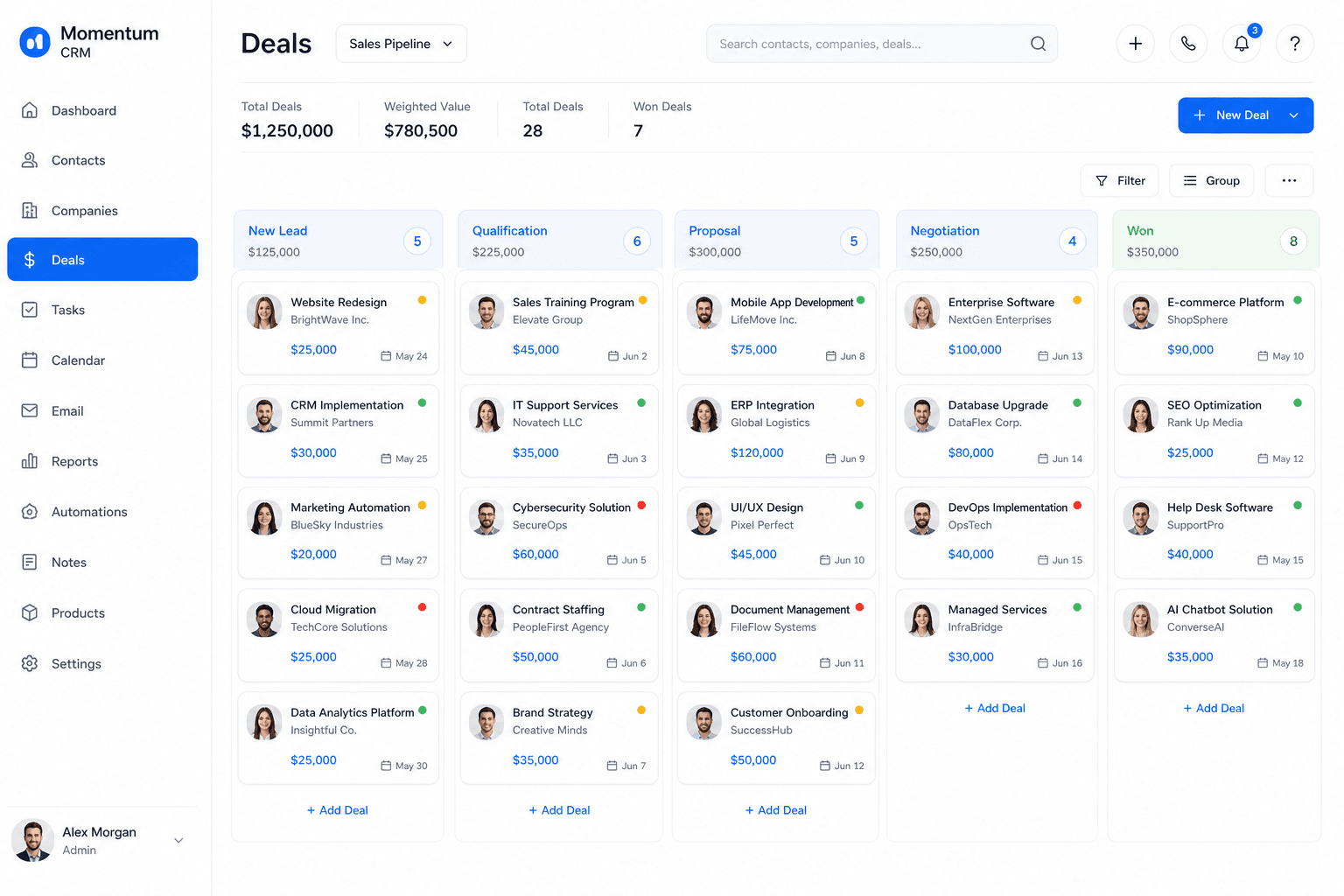
Select an entity. Each record inherits identity, permissions, audit, metadata, workflow, and AI context — so CRM, ERP, and ops data stop living in separate worlds.

Company participates in the universal graph — queryable, automatable, and available to governed AI agents.

Metadata Engine

No-code configuration on a governed schema

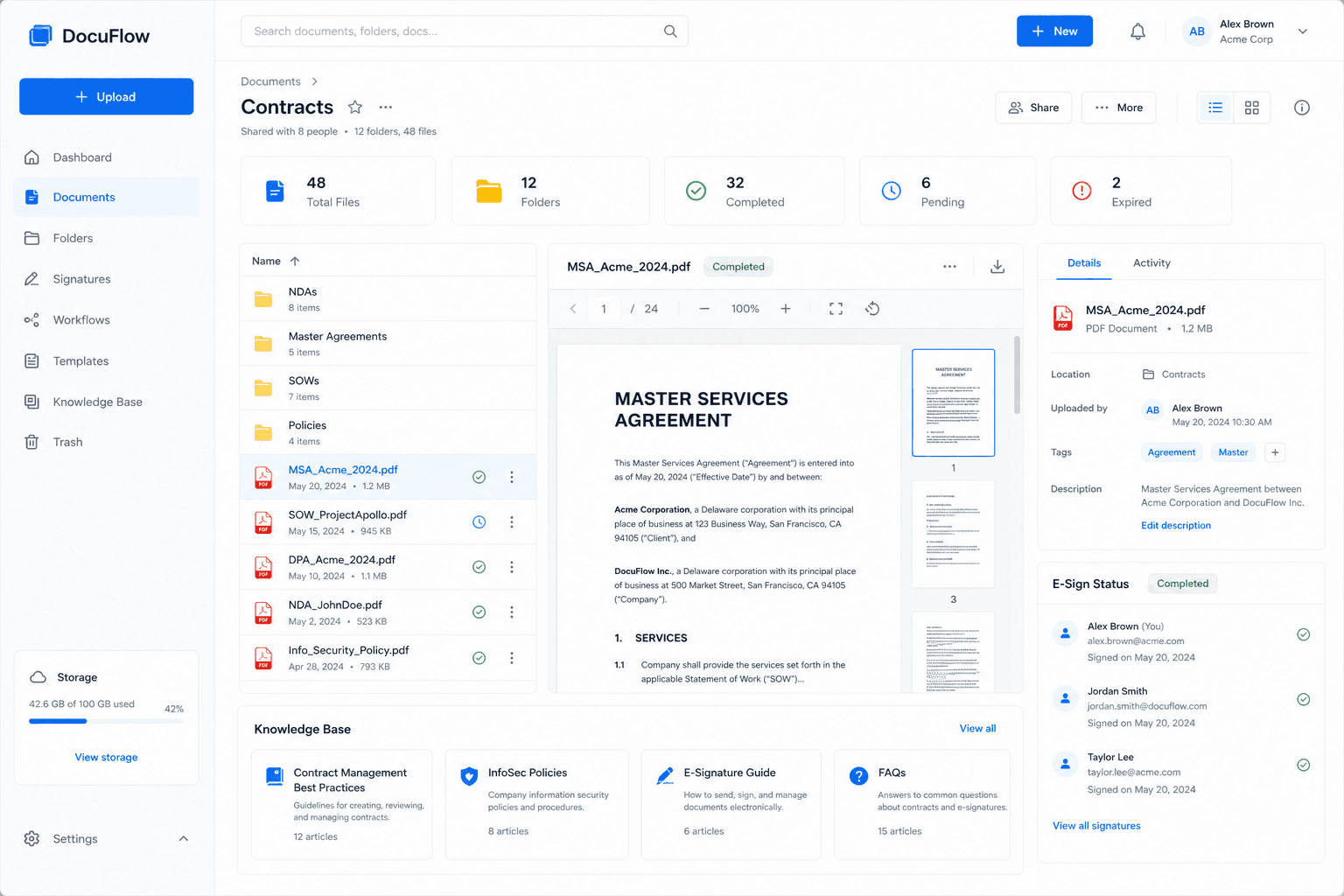
Metadata, dynamic forms, custom objects, fields, layouts, permissions, validation, business rules, views, and dashboards — change the OS without redeploying applications.

No-code configuration
Metadata

Declarative definitions for objects, relationships, and UI.

Dynamic Forms

Runtime forms generated from schema and layout metadata.

Custom Objects

Extend the entity model without forking core modules.

Fields

Typed fields, computed values, and picklists with validation.

Layouts

Role-aware layouts for create, edit, and detail experiences.

Permissions

Metadata-driven visibility and editability rules.

Validation

Field and record rules evaluated before commit.

Business Rules

Declarative logic that travels with the object.

Views

Saved filters, boards, and lists shared across teams.

Dashboards

Composable analytics widgets bound to live entities.

Workflow Engine

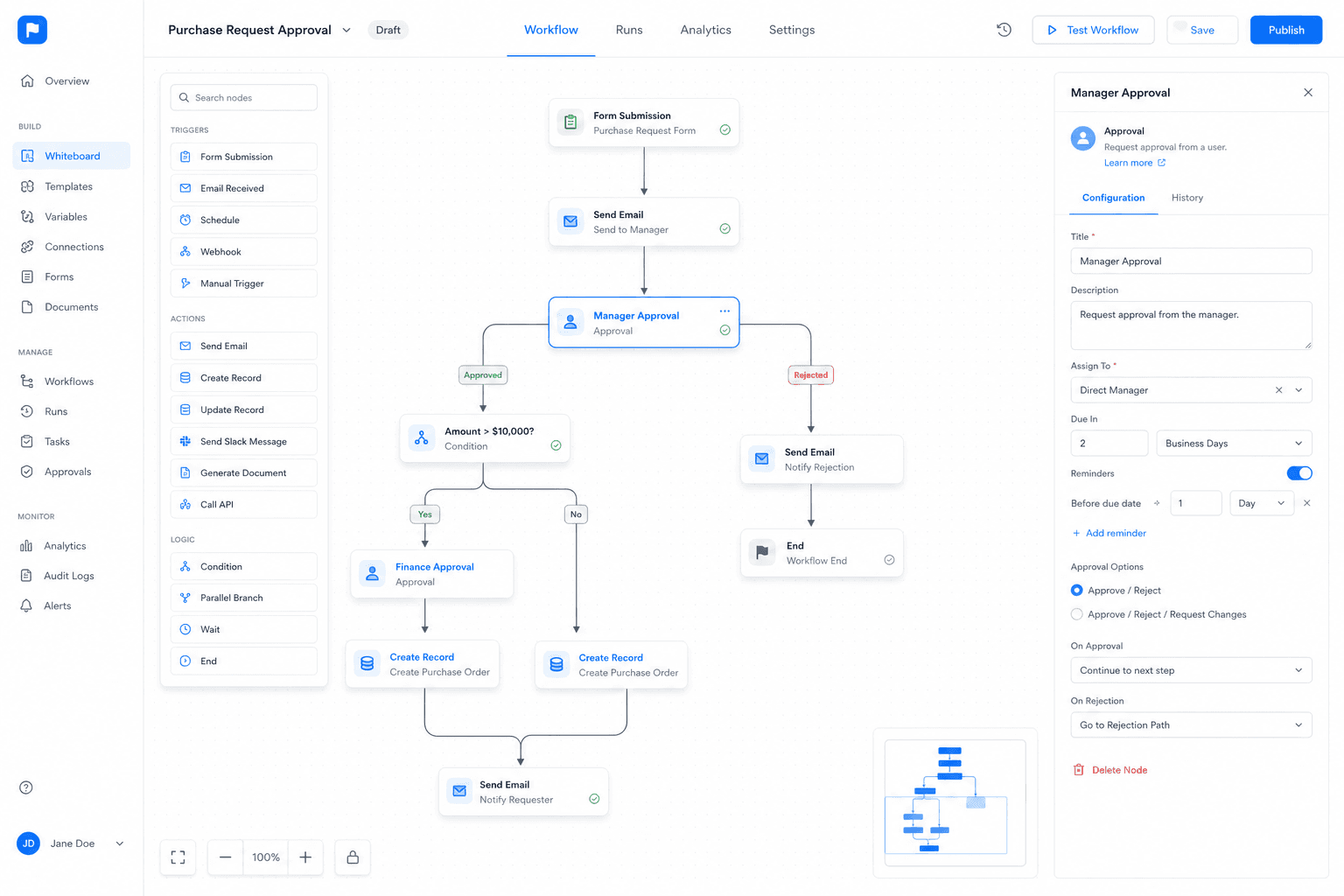
Visual orchestration across the operating system

Triggers, conditions, actions, approvals, timers, AI actions, notifications, webhooks, and automation — on one engine.

Trigger
Condition
Action
Approve
Notify
Triggers

Record events, schedules, inbound webhooks, and manual starts.

Conditions

Branch on fields, roles, SLAs, and AI classification.

Actions

Create/update records, assign owners, call APIs, run scripts.

Approvals

Multi-step, parallel, and escalation paths.

Timers

Delays, reminders, and deadline-driven branches.

AI Actions

Summarize, classify, draft, and decide via the AI Platform.

Notifications

Notify humans and systems with templated content.

Webhooks

Push signed events to external orchestration.

Automation

Reusable recipes published to the Marketplace.

Plugin Framework

Extend the OS safely

SDK, extension points, lifecycle, versioning, marketplace, permissions, sandbox, dependencies, and developer experience.

SDK

Typed APIs to extend UI, entities, and workflows safely.

Extension Points

Hooks for forms, actions, pages, and background jobs.

Lifecycle

Install, upgrade, disable, and uninstall with health checks.

Versioning

Semver packages with compatible kernel contracts.

Marketplace

Discover, review, and deploy apps and industry packs.

Permissions

Least-privilege scopes reviewed at install time.

Sandbox

Isolated runtime for untrusted or pre-production code.

Dependency Management

Declared deps on modules, APIs, and AI capabilities.

Developer Experience

CLI scaffolding, local emulators, and CI templates.

Deployment Architecture

Cloud to air-gapped — one platform model

Cloud, private cloud, hybrid, on-premise, dedicated, multi-region, and disaster recovery.

Cloud

Fully managed multi-tenant SaaS with continuous delivery.

Private Cloud

Dedicated tenancy in your chosen cloud account.

Hybrid

Sensitive workloads on-prem with cloud control plane options.

On-premise

Air-gapped and regulated deployments where required.

Dedicated

Isolated stacks for large enterprise commitments.

Multi-region

Active capacity and data residency by region.

Disaster Recovery

RPO/RTO targets with tested failover runbooks.

Developer Platform

Build on the Business Operating System

SDKs, REST, GraphQL, webhooks, CLI, API explorer, sandbox, and documentation.

SDKs

JavaScript, TypeScript, Python, Node.js.

REST API

Full CRUD across entities and platform services.

GraphQL

Typed queries across the entity graph.

Webhooks

Signed real-time events into your systems.

CLI

Scaffold apps, sync metadata, deploy plugins.

API Explorer

Interactive console against your sandbox.

Sandbox

Safe environment with synthetic data.

Documentation

Guides, references, and architecture notes.

Platform APIs

One API surface for the operating system

Identity, entities, metadata, workflows, AI, and events — consistent contracts across every module.

Identity & Access
/v1/identity

Users, roles, tokens, and SCIM.

Entities
/v1/entities

Universal CRUD for the entity model.

Metadata
/v1/metadata

Schema, layouts, views, and rules.

Workflows
/v1/workflows

Definitions, runs, and approvals.

AI
/v1/ai

Invoke, embed, agents — never raw LLM keys in apps.

Events
/v1/events

Subscribe and publish platform events.

Invoke governed AI · typescript
import { Woxox } from '@woxox/sdk'

const woxox = new Woxox({ apiKey: process.env.WOXOX_API_KEY })

// Apps never hold raw LLM credentials
const result = await woxox.ai.invoke({
  capability: 'summarize',
  entity: { type: 'deal', id: 'deal_123' },
})

Performance & Scalability

Built for enterprise load

Caching, queues, horizontal scaling, load balancing, HA, workers, event bus, and monitoring.

Caching

Edge and application caches for hot entity reads.

Queues

Durable queues for async and bursty workloads.

Horizontal Scaling

Stateless services scale with demand.

Load Balancing

Regional balancers with health checks.

High Availability

Multi-AZ and multi-region patterns.

Background Workers

Isolated workers for heavy jobs.

Event Bus

Fan-out between modules and plugins.

Monitoring

SLOs, traces, and anomaly alerts.

Comparison

CRM, ERP, and SaaS sprawl vs Business OS

Highlighting unified platform, AI governance, metadata, workflow, and developer surface.

Comparison of Traditional CRM, ERP, Disconnected SaaS, and Woxox Business OS
CapabilityTraditional CRMERPDisconnected SaaSWoxox Business OS
Unified platformSales-centricBack-office centricNoYes
Single databasePartialPartialNoYes
One identity modelLimitedLimitedNoYes
Metadata engineRareCustom heavyNoYes
Cross-module workflowLimitedModule-boundNoYes
AI governanceBolt-onBolt-onFragmentedCentral platform
Developer platformCRM APIsERP APIsPer-vendorOne OS API surface
Plugin marketplaceApp exchange*Partner onlyN/AKernel-native

* Partner ecosystems vary by vendor; Woxox plugins run on the shared kernel with scoped permissions.

FAQ

Architecture questions

How is Woxox different from a CRM or ERP?

Woxox is a Business Operating System. CRM and ERP capabilities are applications on a shared kernel, metadata layer, workflow engine, and AI platform — not standalone products with their own databases.

Do applications call LLMs directly?

No. Every application consumes AI through the centralized AI Platform (model router, RAG, governance). Apps never hold raw model credentials.

Can we extend the platform?

Yes — via the Plugin Framework, Metadata Engine, Workflows, Marketplace, and public APIs (REST, GraphQL, webhooks, SDKs, CLI).

What deployment models are supported?

Cloud, private cloud, hybrid, on-premise, dedicated, and multi-region with disaster recovery options for enterprise buyers.

Woxox Business OS

Ready to evaluate the Business OS architecture?

Book an architecture demo with our platform team — or explore developer documentation and start in the sandbox.